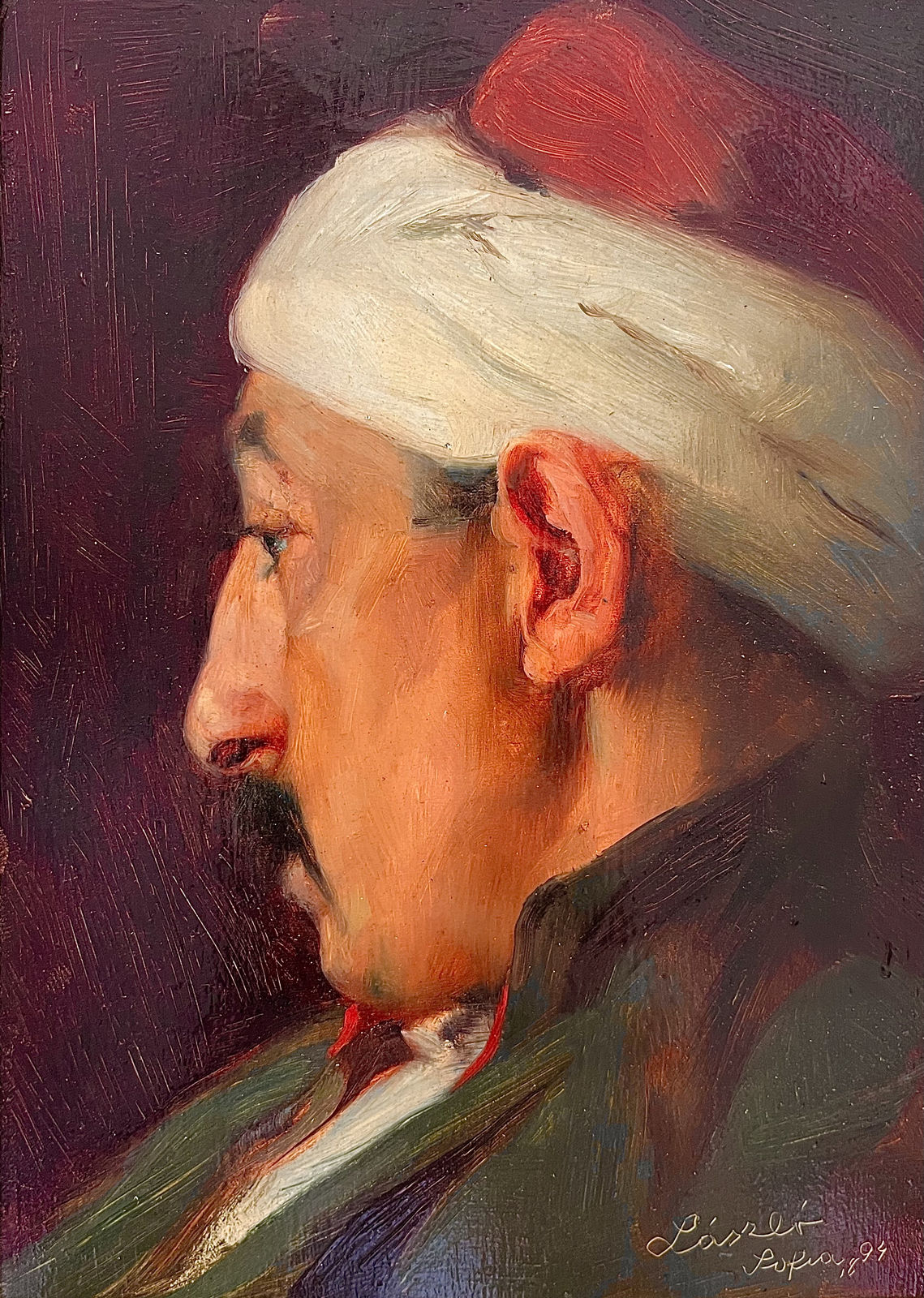
PHILIP DE LÁSZLÓ 1869-1937
oil on panel
Provenance
Private Collection, United KingdomLiterature
De László Archive 150-0009, letter from de László to Elek Lippich de Korongh, 8 November 1894
Owen Rutter, Portrait of a Painter, London, 1939, pp. 132-141
The de László Archive Trust, The Catalogue Raisonné of Works by Philip de László (1869-1937) [online], cat. no. 110635
Philip de László was one of the most celebrated portrait painters of the late 19th and early 20th centuries. Inheriting the mantle of John Singer Sargent, de László developed a signature style characterised by fluid, bravura brushwork and a sophisticated use of light that lent his subjects an air of both grandeur and approachability. De László prioritised a grand manner in his art that emphasised the status and beauty of his sitters, utilising a palette that was often vibrant yet harmoniously balanced. His mastery of fabric textures, from shimmering silks to heavy velvets, combined with his keen eye for flattering likenesses made him the preferred painter for society of the day.
In 1894, de László’s burgeoning reputation led him to Sofia, Bulgaria where he had been commissioned to paint the portraits of Prince Ferdinand I and Princess Maria Louisa. During his stay in the Bulgarian capital, de László found himself captivated by a city ‘deep in snow’ and caught between its Ottoman past and a modernising future. Writing to his mentor, Elek Lippich de Korongh, he described a ‘new world’ of graceful minarets and ancient Turkish quarters. This tantalising glimpse into the orient inspired him to move beyond formal court commissions and explorers Turkish subjects, resulting in a series of intimate studies that captured the mixed population and exotic atmosphere of the Bulgarian capital.